
A Guide to Documentary Film-making
general content module
From Equipment to Industry Trends—Everything You Need to Know
Documentary filmmaking is a blend of storytelling, technical precision, and logistical execution. Whether you’re capturing raw, unscripted moments or producing a meticulously crafted docuseries, having the right equipment, knowledge, and resources is crucial. This guide explores essential aspects of documentary production, including equipment maintenance, lighting techniques, production vehicles, industry trends, and FAQs.
Equipment Maintenance: Keeping Your Gear Ready for the Field
Extend the Life of Your Equipment and Ensure Peak Performance
When working in unpredictable environments, your gear is your lifeline. Documentary filmmakers often shoot in extreme conditions—hot deserts, freezing mountains, or urban landscapes. Keeping your equipment in top condition ensures that you can capture your story without interruptions.
Best Practices for Equipment Maintenance:
• Regular Cleaning – Dust, dirt, and moisture can damage sensitive equipment. Always clean lenses, sensors, and filters after each shoot.
• Battery Management – Rotate batteries, keep spares charged, and avoid exposing them to extreme temperatures.
• Storage Solutions – Store cameras and lenses in climate-controlled cases to prevent humidity damage.
• Firmware Updates – Keeping your gear’s software updated ensures better functionality and eliminates potential glitches.
• Routine Lens & Sensor Checks – Scratches, smudges, and dust can degrade image quality. Regularly inspect and clean optics.
FAQs & Guides: Answering the Big Questions
Common Challenges and How to Overcome Them
Documentary filmmaking comes with unique challenges. Here are some frequently asked questions and best practices to navigate the process.
1. What’s the Best Camera for Documentary Filmmaking?
There’s no single “best” camera—it depends on your shooting style. If you’re filming in controlled settings, high-end cinema cameras like the ARRI Alexa 35 or Sony FX9 offer incredible image quality. For run-and-gun documentary work, compact systems like the Canon C70 or Sony FX3 provide flexibility and portability.
2. How Do You Capture High-Quality Audio in the Field?
Good visuals mean nothing without clear audio. Use external shotgun microphones (Sennheiser MKH 416, Rode NTG5) and lavaliers (Sennheiser G4, Deity Microphones) for interviews. Always carry a backup recorder like the Zoom F6 to ensure you capture clean sound.
3. How Do You Shoot in Low-Light Conditions?
Documentaries often require shooting in natural or available light. To handle low-light situations:
• Use fast lenses (aperture f/1.4–f/2.8).
• Work with cinema cameras that excel in low light (Sony FX3, Canon C500 Mk II).
• Invest in compact, battery-powered LED panels for fill light.
4. How Much Storage Do You Need for a Documentary Shoot?
Shooting in 4K or higher requires substantial storage. Plan for at least:
• 2TB per shoot day for 4K footage.
• Multiple SSDs (Samsung T7, SanDisk Extreme Pro).
• RAID storage for long-term backups.
5. How Can I Improve My Documentary Interview Setups?
• Choose a quiet location with natural depth for a cinematic look.
• Use soft lighting setups to create a warm, inviting aesthetic.
• Keep the camera at eye level for a more engaging interview.
• Capture B-roll to add visual variety.
Industry Trends: The Future of Documentary Film-Making
What’s Changing in Documentary Production?
The documentary film industry is constantly evolving—with new technology, formats, and distribution models shaping the way stories are told. Here are some key trends to watch:
1. AI-Powered Editing and Transcription
Editing software like Adobe Premiere Pro and DaVinci Resolve are integrating AI tools to speed up video editing, color grading, and transcription. These features help filmmakers reduce post-production time while maintaining high-quality storytelling.
2. High-Resolution & VR Storytelling
With the rise of 8K cameras and VR (Virtual Reality) filmmaking, documentaries are becoming more immersive. VR storytelling allows viewers to experience real-world events firsthand—an innovation that’s gaining traction in journalistic and educational documentaries.
3. Streaming Platforms Shaping Distribution
Netflix, Hulu, and Amazon Prime have become major players in the documentary space. Digital-first releases are now more common than traditional film festivals, making streaming partnerships essential for filmmakers looking to reach a broad audience.
4. Mobile Film-making & Compact Setups
Lightweight camera rigs like the iPhone 15 Pro with external gimbals and lenses are being used in micro-budget documentaries. The emphasis on mobility and discretion allows filmmakers to capture authentic, intimate moments without drawing attention.
Why Work With Us
We get storytelling. Whether it’s a captivating brand video or stunning photography, we blend creativity with strategy to make your content stand out. With a seamless production process, top-tier visuals, and a passion for capturing what makes your brand unique, we don’t just create content. We create impact. Let’s tell your story the way it deserves to be seen.

experienced
Over twenty years of combined experience in video production, photography and post-production.

award-winning
We’ve been honored with multiple Telly Awards, celebrating our work in video and television across all screens.

passionate
We love what we do. Every brand and business we work with is a chance to tell a creative story with a lens.
Lighting for Documentary Films
Mastering Natural and Artificial Light
Lighting is one of the most important elements in documentary filmmaking. The goal is to create a look that feels natural, cinematic, and emotionally compelling.
Best Lighting Practices for Documentaries:
• Use Soft, Diffused Light – Softboxes, reflectors, and LED panels like the Aputure 600D provide natural, flattering light for interviews.
• Leverage Practical Lighting – Incorporate available light sources like lamps, candles, and streetlights for authentic-looking scenes.
• Control Shadows & Spill – Use flags, barn doors, and negative fill to shape the lighting.
• Portable Lighting Solutions – Battery-powered LED lights like the Nanlite Forza 300B allow flexibility when shooting in remote locations.
Production Vehicles: Transporting Your Crew & Gear
The Ultimate Solution for On-Set Mobility
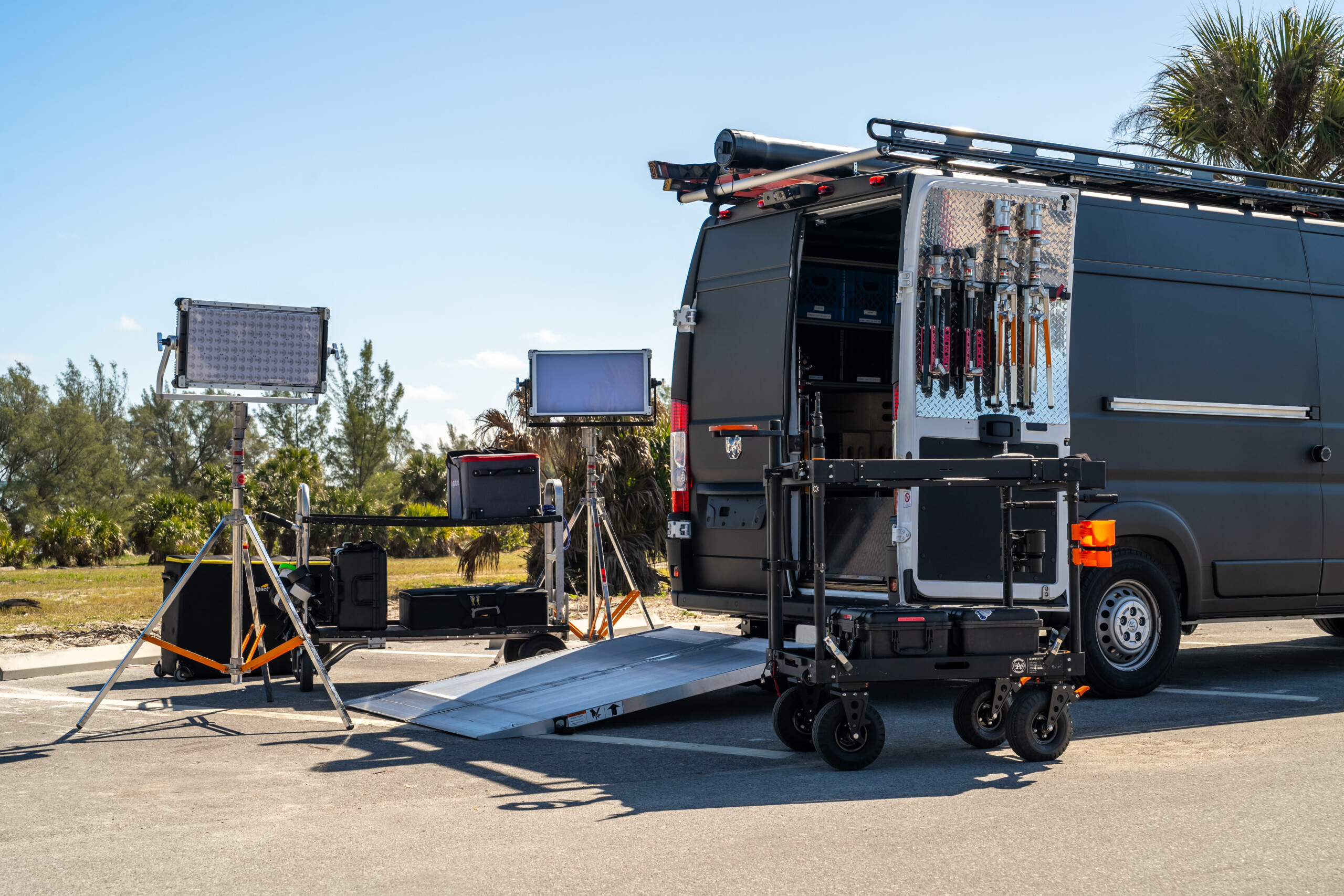
G&E Production Van Package
Built for Efficiency, Packed for Performance
Efficient + Scalable
- Designed for quick access to essential gear with a client-friendly loading setup.
- Stocked with grip and lighting essentials to handle most production needs.
- Organized for streamlined access, minimizing downtime on set.
Final Thoughts: Elevate Your Documentary Production
Expert Gear, Industry Insights, and Professional Support
Documentary filmmaking requires dedication, technical skill, and the right tools. From choosing the best camera setup to maintaining gear, staying updated on industry trends, and ensuring your production workflow is seamless, every element plays a role in the final story.
At Two Stories Media, we provide gear rentals, production vehicles, expert crew members, and industry expertise to support your next documentary project.
Contact Us
Let’s Point You in the Right Direction
Bring your vision to life! Tell us about your project, and we’ll craft a tailored solution just for you. Whether you’re looking for video production, photography, or creative support, our team is ready to make it happen. Fill out the form, and we’ll get back to you faster than you might expect—let’s start creating together!
I Want To